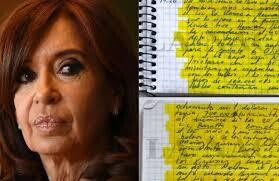
Fourth, the trial will proceed as scheduled, as the refusal of an accused to testify does not halt the oral proceedings. There is also a delicate aspect linked to his status as a 'repentant' or collaborating accused. The National Criminal Procedural Code explicitly states that the accused may refrain from testifying, and this does not authorize coercion, an oath of truthfulness, or a presumption against them. If that were to happen, the court could review the value of his statements and, eventually, the benefit linked to his collaboration. By not ratifying, expanding, or answering questions about his notebooks, Centeno deprives the court of a direct opportunity to assess his current credibility and the defenses of a chance to confront him face-to-face about inconsistencies, dates, routes, names, and potential contradictions. Both the UIF and the prosecution have maintained before the court that there is 'abundant proof' beyond the notebooks and that the arrests and accusations were not a mechanical consequence of these writings, but of an investigation that later sought to corroborate what was recorded there. For this to happen, it would have to be demonstrated that there was a significant breach of the regime's conditions or that the provided content lacked criminally significant veracity. In other words: the greatest risk for Centeno does not come from staying silent, but from the trial showing that what he provided cannot be corroborated or was deliberately false. But if the prosecution can demonstrate that his notes and statements were supported by other elements, the current silence will remain an awkward but not decisive procedural fact. That is why, legally, the most serious effect of Centeno's refusal is not the automatic nullity or the instant collapse of the case, but the shifting of the center of gravity of the evidence. The former driver of Roberto Baratta, whose notes were the starting point of the investigation, exercised a procedural right that other accused, including Cristina Fernández de Kirchner and Juan Manuel Abal Medina, also exercised in these days during the oral trial against 86 accused. From a strictly legal point of view, the first relevant fact is that an accused in Argentina has the right to remain silent. First, the defense of the accused gains an argument to discuss the probative weight of Centeno's previous statements and to insist on objections regarding authenticity, chain of custody, and the possibility of effective contradiction. That point will surely be exploited by the defenses to argue that the main narrative trigger of the case was left without effective oral endorsement at this stage of the trial. Second, the prosecution and the civil plaintiffs are now more than ever obligated to support the accusation on corroborating external elements: phone call cross-references, records, documentation, other confessions, movements, contexts, and peripheral testimonies. Law 27.304 provides for criminal benefits for those who provide 'precise, verifiable, and plausible' information, and also contemplates sanctions if that information was maliciously false or inaccurate. Buenos Aires, March 19, 2026 - Total News Agency - TNA - Oscar Centeno's decision to refuse to testify now before the Federal Oral Court No. 7 in the 'Notebooks' case does not, by itself, mean a fatal blow to the file, but it does add a legal and strategic difficulty to one of the most sensitive corruption processes in Kirchnerism. This stance is central to understanding why the driver's refusal complicates, but does not pulverize, the architecture of the case. In concrete terms, the most probable consequences are four. Third, the TOF 7 will have to assess in the sentence whether Centeno's current silence reduces or not the convictive force of his previous contributions. From now on, the debate will revolve less around the symbolic impact of the repentant driver and more on the actual robustness of the rest of the evidence. In a case so traversed by political and procedural challenges, that difference can be decisive at the time of sentencing. Translated to the case: Centeno can refuse to speak at this stage without that single decision constituting a crime, procedural rebellion, or inverted confession. In an oral trial, immediacy matters. But one thing is to refuse to testify today, and another, very different, thing is to prove that he lied before. Even so, this does not automatically mean the fall of the accusation. The reason is simple: the 'Notebooks' case does not rest, at least according to the public accusation, exclusively on the word of Centeno or on his notes in isolation. The current refusal, by itself, is not equivalent to an automatic retraction nor does it immediately erase the collaboration agreement. That right operates even if it concerns a figure as central to the origin of the case. Now, that the refusal is a right does not mean it is neutral in terms of litigation.